The short answer
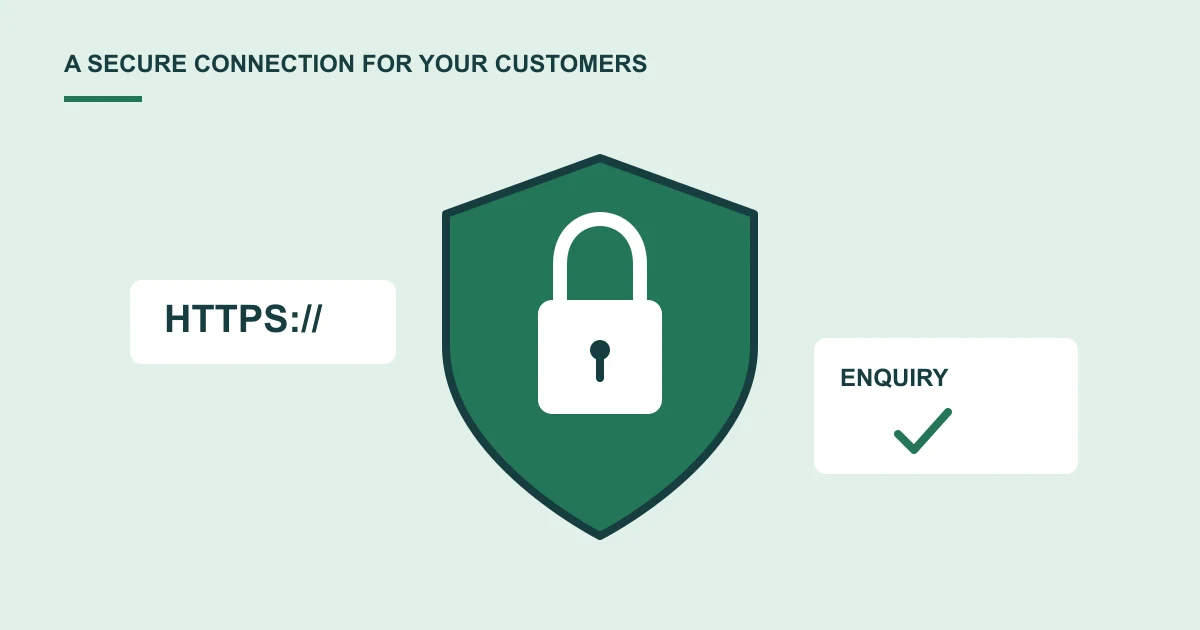
A business website should use HTTPS with a valid certificate. It protects information in transit and helps visitors connect to the intended site. Agree who installs, renews and checks the certificate; it does not replace broader website security.
A potential customer opens your website and sees a connection warning. They have not read your services or reached the contact form, but they already have a reason to hesitate.
SSL is the familiar name used for the certificate behind HTTPS. For a business owner, the important questions are whether the connection works correctly and who keeps it that way.
What HTTPS protects
HTTPS encrypts information travelling between a visitor's browser and your website. That matters when someone submits their name, contact details or an enquiry. It also helps protect information from being changed in transit.
It does not stop every kind of website attack or guarantee that a business is legitimate. Software updates, account access and backup arrangements remain separate responsibilities.
Check more than the homepage
Ask your provider to check the main domain, any relevant subdomains, enquiry forms and redirects from old HTTP links. Images or other resources still loaded over HTTP can also need attention.
Test the journey a customer actually uses. A homepage opening securely is not the same as confirming every form or booking connection works as expected.
Make renewal somebody's responsibility
Find out whether renewal is automatic, who monitors failures and which account receives notices. Keep your business in control of the domain and hosting accounts.
If a warning appears, record the affected address and contact the responsible provider. Do not ask visitors to bypass the warning to send personal information.
What to include in your brief
Bring your domain name, hosting details, any warning message and the names of connected booking or enquiry tools. Ask for installation, renewal and verification to be clearly included.
What should I check if the browser shows a warning?
Record the exact page address and warning, then contact the person responsible for the website. A certificate may be expired, issued for another hostname or installed incorrectly. Do not ask customers to bypass a warning to submit an enquiry.
Ask the provider to check the full customer journey, including redirects, contact forms and any separate booking subdomain. If an outside booking service is involved, establish which provider is responsible for that connection.
Who should own SSL renewal and recovery?
Your agreement should identify the account owner, the person responsible for renewal and the contact for failures. Automatic renewal still needs a clear owner who can investigate a failed renewal or a configuration change.
Keep domain and hosting access available to the business. If the current supplier is unavailable, another authorised provider should be able to understand the setup and arrange the necessary access.
What does this look like in a real project?
The Yukt Law case study describes a website revamp that included hosting and SSL work, followed by continuing hosting, backups and maintenance. Its original performance screenshots are shown with the tested addresses and conditions.
That example illustrates why SSL belongs within an agreed website-care arrangement. It is not evidence that a certificate alone improves enquiries or provides complete website security.
Discuss website security if your certificate or HTTPS setup has no clear owner.
Common questions
Do I need an expensive SSL certificate?
Not every website needs a paid certificate. Ask which certificate suits your domain setup, how renewal works and what the provider charges for configuration and support. A certificate alone does not prove a business is trustworthy.
Does SSL make the whole website secure?
No. HTTPS protects the connection, while updates, account permissions, form handling and backups address different risks. Agree those responsibilities separately.
Who should receive renewal alerts?
Use an account your business can access and name the provider or person responsible for acting on a failed renewal. Keep an alternative support contact available.
Sources and project context
- web.dev: Why HTTPS matters Checked 22 October 2026
- Yukt Law Offices: redesign and continuing website care Web Build Solutions project record
Turn the question into a clear next step.
Tell us about your current setup, the people using it and what needs to improve.