
The short answer
A property website needs a clear agreement about where listing information comes from, when it updates, how visitors search it and who responds if the feed fails. Those responsibilities belong in the scope alongside the visual design.
A property page can look finished while its listing information is out of date. Before commissioning a redesign, identify the records, images and enquiry routes behind the public pages. Then agree what the website displays and which system is responsible for each change.
Begin with the source of the listing
Ask where agents maintain property details and how the website receives them. The design brief should distinguish the source record from the public presentation. Record the fields needed for search, the status values visitors see and the contact responsible for an enquiry.
Do not assume that a CRM connection updates instantly. Scheduled synchronization, manual entry and live requests are different arrangements. The chosen approach should be described clearly enough that staff know when to expect a change.
What the published WebBuild project demonstrates
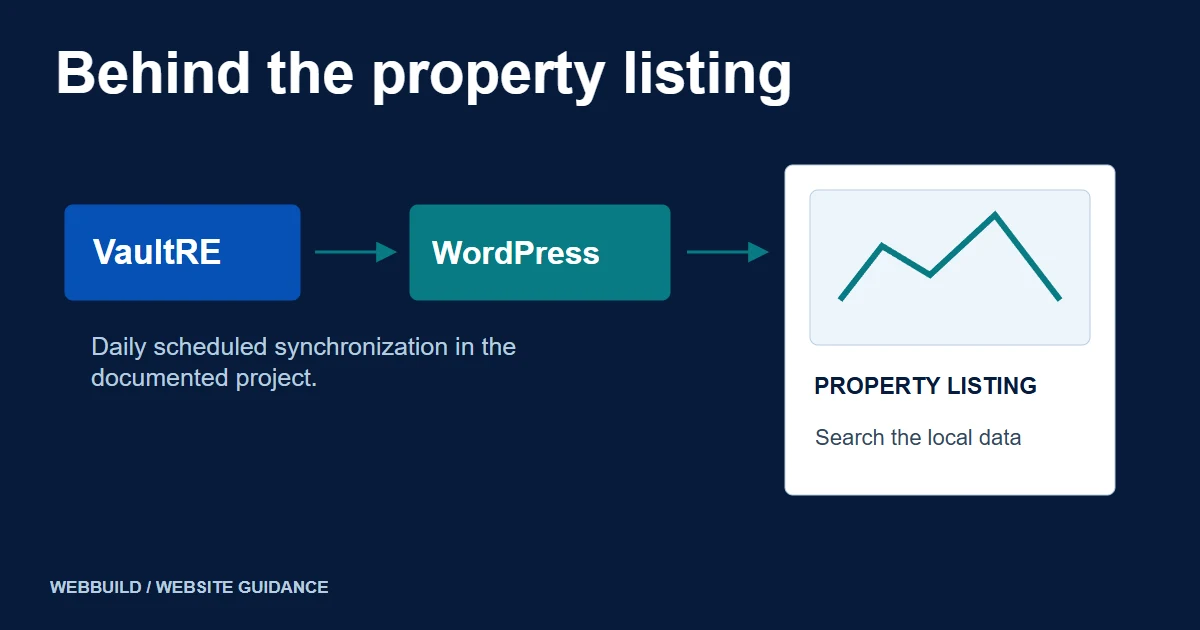
The six-site WordPress and VaultRE case study documents custom PHP integrations developed by Web Build Solutions. The integrations fetch listing information on a daily schedule and synchronize it into each site's WordPress database. Public search and filtering use that local data. Sold statuses are updated and listing images are managed through VaultRE.
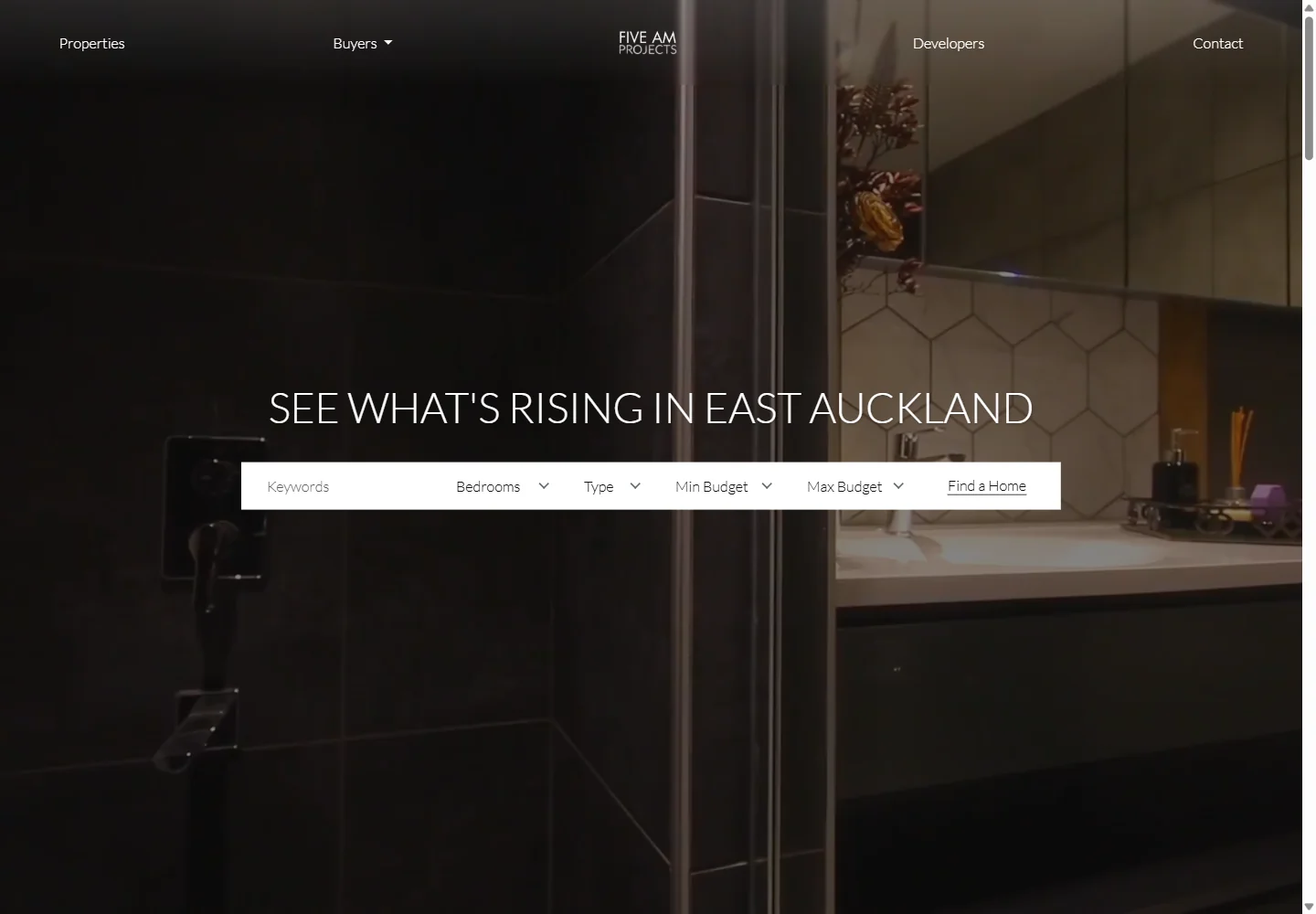
The six named sites are Team Vish, Area Specialist, Team Rami, Mark Prior, Mark & Co and Five AM Projects. Datacal New Zealand managed the client relationship and supplied the designs and requirements. WebBuild's role was technical implementation.
These details describe that engagement. They do not establish the features, access conditions or update frequency of every current VaultRE product, and they are not a promise of real-time data for a new project.
Documented six-site implementation
Daily import. Local property search.
import
Search and filters read the synchronized local data.
Public website · Five AM Projects
Daily updates in this case; not real-time synchronization.
Define what happens when something changes
Walk through a newly added listing, a changed price, a sold property and an image update. Ask how each change reaches the website and how the result is checked. Include what happens if a record is missing or a synchronization run does not complete.
The provider should identify who investigates the connection, which information is needed and what staff should do meanwhile. Avoid relying on an undefined promise that the feed will be maintained.
Test the public search as a customer task
Use ordinary browsing tasks rather than checking only a property detail page. Can visitors change filters, understand an empty result and reach the correct enquiry route on a phone? Check the information shown beside the listing and the recipient of its form.
Agree the supported data and filtering scope before assuming the design includes every CRM field. Access, image usage and third-party service conditions need confirmation for the actual project.
Review checkpoints
- Source
- Who changes the property record?
- Timing
- When should the website update?
- Exceptions
- Who notices and investigates a failure?
- Enquiries
- Which person receives and replies?
Separate integration delivery from continuing care
A quote should explain the initial mapping and build, launch tests, account access and continuing support. Ask whether changes to the source system or data format are included in care or separately scoped. Keep the relationship between agency, technical provider and client explicit.
For a New Zealand or Auckland business evaluating remote support, the published project record is useful evidence of the implementation role. It does not imply an Auckland office or local on-site response.
Prepare a focused integration brief
Bring the current website, the source platform, sample public listing fields and a description of how staff update information today. Avoid sending private access credentials as part of an initial enquiry.
Discuss your website requirements, or review API integration services when the connection is the main concern. Use the published case study to ask precise questions, rather than assuming every property website needs the same architecture.
Tell us about your project
Start with your details. We’ll discuss the right next step.
Questions covered in this guide
Was the documented listing integration real time?
No. The published six-site case describes daily scheduled synchronization into local WordPress data.
What role did Datacal have?
Datacal New Zealand managed the client relationship and supplied designs and requirements; WebBuild provided technical implementation.
Sources and project context
- Published WebBuild case evidence Checked 7 November 2026
- Six real estate websites connected to VaultRE Web Build Solutions project record
Turn the question into a clear next step.
Tell us about your current setup, the people using it and what needs to improve.